Google

Showing posts with label American Anthropology Association. Show all posts

Sunday, December 18, 2022

Save the Shy Giants


                      Cross River gorilla babiesImage courtesy of world wildlife


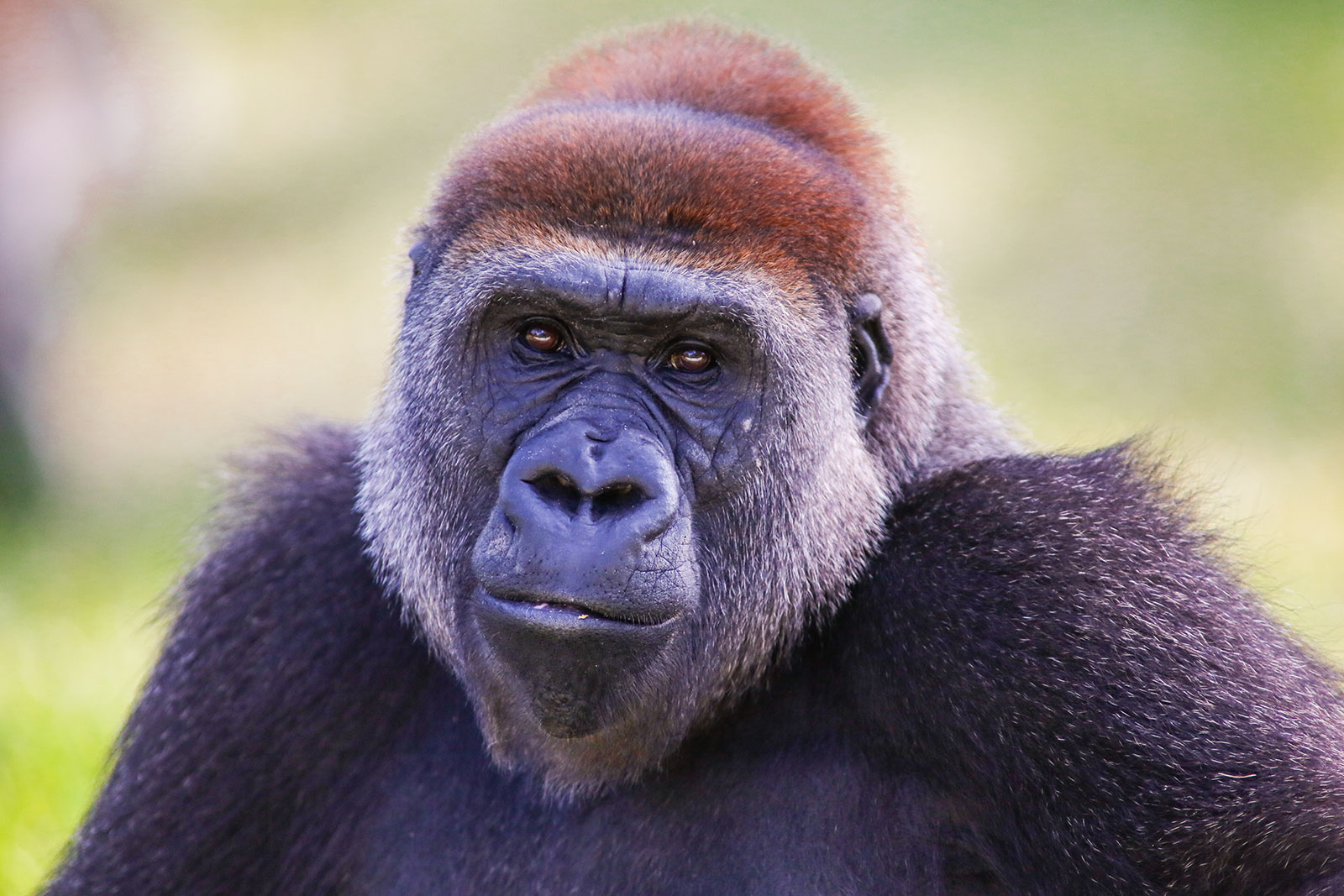
The Cross River Gorilla lives in the coastal rainforests of African countries such as Nigeria and Cameroon. This primate is super shy and doesn't come out of the trees or stay within their safe habitat. This primate is disappearing really fast and there are only 200 of them left on our planet.

Why are they disappearing?

What picture do you imagine while reading the following? Imagine that every day, human activity makes the world around you smaller and smaller. The canopy above, providing food, shelter, and isolation, disappears forever as you pass. Every day, gorillas, magnificent but extremely endangered primates, are forced to say goodbye to their habitat. Farms, cattle ranches, or logging replace the once-connected forest with isolated patches. The habitat destruction causes segmented habitat zones for the different species with no interaction. The chances of cross-breeding decrease which leads to a weaker gene pool and a significant reduction in their population. The horror does not stop there. Along the way, gentle giants are being killed for their meat. However, they are frequently dismembered and marketed on the black market, where they are killed for bogus medical properties and deeds. 

When combined with poaching and deforestation, even seemingly minor levels of hunting promote the population’s weakening. With increasing numbers of humans encroaching on their habitats, gorillas must face another peril- diseases. Given that they share many of the same pathogens as humans, we need to protect gorillas from illnesses to which they are not accustomed. If gorillas become ill and are the target of large epidemics, the population will swiftly decline. Therefore, the future of gorillas is uncertain. Only international assistance and collaboration may protect these gentle giants from extinction and guarantee that they continue to thrive in our environment.

How can we save them?

The future of gorillas is on the line. However, there’s a silver lining! This problem can be solved in multiple ways.

Educating the villagers living near the gorilla habitat is one of the best ways to conserve gorillas. Just approach them and tell them about the gorilla's role as the rainforest’s gardeners, dropping seeds around the jungle. When the forest is safe, they are safe. Another strategy is to make stricter laws enforced by the government and take legal steps to strengthen the role of wildlife laws – say no to poaching. Imagine wild reserves where gorillas can walk freely, not caring about humans. Technology can also be a blessing. High-tech tracking collars and camera traps can track gorillas’ movements and record felonious offenses with exquisite results. Just imagine that local villagers can earn a wage by guiding tourists. These approaches ensure that gorillas and their habitat thrive as never before.

What are your opinions on this issue? Share your thoughts on the matter and how we can save these magnificent creatures in the comments.


 Adult Cross River GorillaImage courtesy of gorillas.org

How can you help?

  • Share this post and let everyone know about the Cross River Gorilla!
  • Give money to organizations working to save the gorillas. Here are a few reputable organizations:
  • Choose things that don't hurt the forest, like recycled paper.

Every little bit counts! Together, we can save these amazing creatures.

Real People Taking Action!

The World Wildlife Fund (WWF) has already been working with the Nigerian government to help the Cross River Gorilla. They're making safe zones, teaching people about sustainable forestry (growing trees responsibly), and using cool tech to track the gorillas. We can build on their success and make sure these shy giants have a future!
Sunday, August 7, 2022

Cross River Gorilla

The Cross River gorilla s a critically endangered subspecies of the western gorilla species (Gorilla gorilla) .Its scientific name is Gorilla Gorilla Diehli and is found in the coastal forest region near the Nigeria Cameroon border of the African subcontinent. I have some special interest in this subspecies since it is considered as the rarest apes found on earth at present, with only 250-300 individuals remaining. Its population was never studied until this species was discovered by the taxonomist Paul Mutschie in 1904. These gorillas stay away from human activity and they hide in their nest in the lowland hilly areas which makes it difficult to count the exact number of remaining individuals. Bamboo forests are another alternative area where they build their nest and seclude themself from human activity.


                            Cross River Gorilla: Image: Courtesy of onearth.org


They live in small groups and the population is distributed within a small area of 3000 square miles of the Cross-Sanaga-Bioko forest ecoregion which is near the Nigeria Cameroon border. They live in the forested hills and mountains of the river named Cross River near Nigeria. They like the tropical and subtropical climates with moist conditions. Compared to the eastern gorillas (Gorilla Beringei), the western gorillas are of relatively smaller stature and have smaller skull size. These species show sexual dimorphism, where females are smaller than males. Males grow as big as 5ft weighing nearly 300 lbs. and the females grow up to 4.5ft weighing nearly 200 lb. Their lifespan is about 30-50 years. Physically their head size is relatively smaller compared to the body size with smaller mouth and teeth. Similar to humans, they don’t have tails and have straight vertebrae. They are vegetarians with seasonal diets and the primary meal consists of fruits, tree bark,  and nuts. They are active during the daytime by walking on 4 legs, building nests, and eating.


This species is critically endangered due to many human activities. Since the size is very big, it is difficult for them to hide. Hunting poses a major threat to the population where a larger number of gorillas are captured and killed for bushmeat. Though there are laws to prevent the hunting, commercial hunting is a major threat in Nigeria lowlands, where the gorilla meat is used for local consumption and exported to other countries. Also the governmental laws are not strongly enforced near the Nigeria Cameroon coastal border, so illegal hunting is very common. Another major threat is the fragmentation of the geographic area occupied by the gorillas due to human activity which includes road construction, mining, farming etc. This prevents the gene flow from cross breeds and limits the genetic diversity of the species, which has a negative effect on the long term viability of the species. Gorillas are used widely for ritual ceremonies and for making medicine which is a major threat to the population. Another major threat is the pet trade across borders where baby gorillas are traded as pets after killing the mother gorillas. Close interactions with humans also caused spreading of diseases like Ebola which killed many gorillas. Climate change, logging, farming etc. are also other factors threatening the population of gorillas.


According to a report from the International Union of Conservation of Nature (IUCN), the population of Cross River gorillas has declined by 60% in the last 20 years due to human activity. The estimates by biologists show that there are only 250-300 Cross River gorillas left on Earth. I believe that the local governments should enforce more stringent government regulations to minimize the human activities near the protected areas. We should also educate ourselves about the importance of other primates in the ecosystem by arranging workshops and seminars. The gorillas play a very important role in seed dispersal for many tropical plants. We need to make policy changes to minimize the use of tropical hardwood, primate meat, and fossil fuels which have a negative impact on these primate habitats. Poverty and inequality has some indirect impact on the primate population through illegal farming and hunting for food, which can be controlling human birth and population control. We should also take measures to reduce the fragmentation of the protected areas and minimize human activity by expanding the protected areas. We should also track the gorilla population with the help of modern technologies like GPS, cameras, counting the nests etc. Governments should enforce strong policing to prevent the illegal trades and logging in the forests. If we continue these efforts for conserving these endangered species, we could bring these scattered groups together to help their breeding and slowly grow their population back to normal.


How can you help?

  • Share this post and let everyone know about the Cross River Gorilla!
  • Give money to organizations working to save the gorillas. Here are a few reputable organizations:
  • Choose things that don't hurt the forest, like recycled paper.

References

1 The Cross River gorillas : a distinct subspecies, Gorilla gorilla diehli Matschie 1904. 

    American Museum Of Natural History

2. Cross River Gorillas http://www.crossrivergorilla.org